
Veneers vs. Bonding: How to Choose the Right Cosmetic Solution
If you’ve been researching ways to enhance your smile, you’ve likely come across two of the most common cosmetic options: porcelain veneers and dental bonding.
Both treatments can improve the appearance of chipped, discolored, uneven, or slightly misaligned teeth. Both can increase confidence. And both are widely used in cosmetic dentistry.
However, veneers and bonding are not interchangeable solutions. They differ in longevity, durability, aesthetic precision, cost, and the type of transformation they are best suited to deliver.
At Enspire Dental in Ann Arbor, we guide patients through this decision by evaluating not just what is possible, but what aligns with their long-term goals, lifestyle, and expectations.
Here’s what you need to know.
Cosmetic Dentistry Is About Design, Not Just Repair
Before comparing veneers and bonding, it’s important to understand that cosmetic dentistry is about more than correcting flaws.
A well-designed smile considers:
- Facial symmetry
- Tooth proportions
- Light reflection and translucency
- Bite alignment
- Long-term durability
- Natural aesthetics
The goal is not to create teeth that look “perfect” in isolation, but to design a smile that looks natural, balanced, and confident.
The choice between veneers and bonding depends on how much change is needed and how long you want that change to last.
What Are Porcelain Veneers?
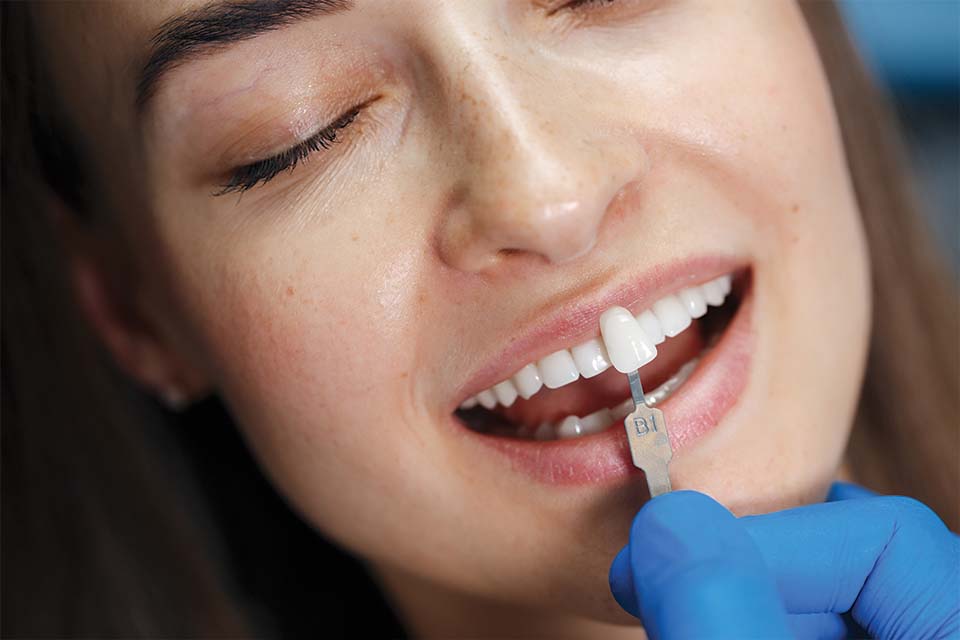
Porcelain veneers are ultra-thin, custom-crafted shells that are bonded to the front surfaces of teeth. They are designed in a dental lab to achieve specific aesthetic goals related to shape, size, color, and alignment.
Veneers are often recommended for:
- Deep or intrinsic stains that whitening cannot correct
- Multiple cosmetic concerns across several teeth
- Uneven edges or worn enamel
- Moderate gaps
- Teeth that appear slightly crooked but do not require orthodontics
- Full smile transformations
Because porcelain mimics the way natural enamel reflects light, veneers provide a highly lifelike and polished appearance.
The Veneer Process
The typical veneer process involves:
- A detailed cosmetic consultation and smile design discussion
- Minimal enamel reshaping to ensure proper fit
- Impressions or digital scans
- Temporary veneers (in many cases)
- Final placement and bonding
Since a small amount of enamel is reshaped, veneers are considered a long-term cosmetic commitment.
Longevity of Veneers
With proper care and regular dental visits, porcelain veneers generally last 10 to 15 years or longer.
They are highly resistant to staining and maintain their color stability over time.
What Is Dental Bonding?
Dental bonding uses a tooth-colored composite resin that is applied directly to the tooth and sculpted into shape. The material is then hardened using a curing light and polished to blend naturally.
Bonding is commonly used for:
- Small chips or cracks
- Minor spacing
- Slight discoloration
- Subtle reshaping of a single tooth
- Quick cosmetic improvements
Unlike veneers, bonding usually requires little to no enamel removal and is typically completed in one visit.
Longevity of Bonding
Composite bonding generally lasts 3 to 7 years, depending on:
- Bite force
- Oral hygiene habits
- Dietary staining factors
- Teeth grinding or clenching
Because composite resin is more porous than porcelain, it can stain over time and may require touch-ups.
Veneers vs. Bonding: A Side-by-Side Comparison
| Feature | Porcelain Veneers | Dental Bonding |
| Material | Porcelain | Composite Resin |
| Appointments | 2–3 visits | Usually 1 visit |
| Enamel Removal | Minimal but required | Little to none |
| Longevity | 10–15+ years | 3–7 years |
| Stain Resistance | High | Moderate |
| Best For | Multi-tooth aesthetic design | Minor single-tooth corrections |
| Investment | Higher upfront | Lower upfront |
This comparison highlights the core difference: veneers are typically used for broader, longer-lasting cosmetic refinement, while bonding is ideal for smaller, conservative adjustments.
Cost Considerations in Michigan
While exact costs depend on complexity and the number of teeth involved, general ranges are:
- Dental Bonding: $300–$600 per tooth
- Porcelain Veneers: $1,000–$2,500 per tooth
Bonding is more affordable initially. However, because veneers last significantly longer and require fewer replacements over time, they may be more cost-effective across a 10- to 15-year period.
The key question is not simply cost, it is value over time.
When Veneers May Be the Better Choice
Veneers may be appropriate if:
- Several teeth require aesthetic improvement
- You desire a uniform, balanced smile
- You want long-term stain resistance
- You are seeking a more dramatic transformation
- You prefer a durable, predictable outcome
Veneers allow for customization in shape, proportion, and color. For patients looking to significantly refine their smile, veneers often provide the most comprehensive solution.
When Bonding May Be the Better Choice
Bonding may be ideal if:
- Only one or two teeth require correction
- The cosmetic concern is minor
- You prefer a conservative approach
- You want a quicker procedure
- Budget is a primary consideration
For example, repairing a small chip from an accidental bite or closing a very minor gap can often be handled beautifully with bonding.
Bite Strength and Lifestyle Factors
An often-overlooked consideration is bite force.
Patients who grind or clench their teeth place more stress on cosmetic materials. In such cases, porcelain veneers may provide greater durability than bonding.
Lifestyle also plays a role. Frequent consumption of coffee, tea, or red wine may lead to staining of composite bonding more quickly than porcelain.
These factors are part of what we evaluate during a consultation.
Emotional Impact and Confidence
Beyond clinical differences, the emotional impact matters.
Patients who undergo cosmetic improvements often report:
- Smiling more comfortably in photos
- Feeling more confident in professional settings
- Reduced self-consciousness in conversation
- Greater satisfaction with their appearance
Bonding can absolutely provide confidence improvements, particularly when correcting a noticeable flaw. Veneers, however, tend to create a more comprehensive aesthetic upgrade when multiple teeth are involved.
Who Is Not a Candidate?
Bonding may not be ideal for patients who:
- Have significant enamel damage
- Require major color correction
- Experience heavy grinding
- Desire dramatic alignment changes
Veneers may not be recommended for patients with:
- Active gum disease
- Untreated cavities
- Poor oral hygiene habits
A stable foundation is essential before pursuing cosmetic enhancements.
How We Help Patients Decide
At Enspire Dental in Ann Arbor, we evaluate:
- The number of teeth involved
- Bite strength and alignment
- Desired level of transformation
- Longevity expectations
- Budget considerations
- Overall oral health
Some patients begin with bonding and later transition to veneers. Others prefer to move directly to veneers for long-term stability.
The best decision is one based on a personalized assessment rather than a general comparison.
Frequently Asked Questions
Do veneers look natural?
Yes. When properly designed, porcelain veneers mimic the translucency and light reflection of natural enamel.
Is bonding painful?
Bonding is minimally invasive and typically requires little to no anesthesia.
Can bonding stain?
Yes. Composite resin is more prone to staining compared to porcelain.
Are veneers permanent?
Because enamel is reshaped during preparation, veneers are considered a long-term cosmetic commitment.
Which lasts longer?
Porcelain veneers generally last significantly longer than bonding.
Can chipped veneers be repaired?
In many cases, veneers can be replaced if damaged.
Choosing the Right Cosmetic Solution
Choosing between veneers and bonding is not about which procedure is “better.” It is about which solution aligns with your goals.
If you are looking for:
- A conservative correction
- A quick aesthetic improvement
- A lower upfront investment
Bonding may be appropriate.
If you are seeking:
- Long-term durability
- Maximum stain resistance
- A more refined, uniform aesthetic
Veneers may be the better fit.
The most reliable way to determine your best option is through a personalized consultation.
If you are considering cosmetic dentistry in Ann Arbor, scheduling an evaluation allows us to assess your smile and provide guidance tailored specifically to you.
Enspire Dental
Stay in Touch!
Latest Articles
Emergency Dentist in Ann Arbor: What to Do Right Now
Need an emergency dentist in Ann Arbor? Learn what to do for tooth pain, broken teeth, or urgent dental issues and how to get care quickly.
Tooth Knocked Out in Ann Arbor? What to Do Immediately (Step-by-Step)
If you have a tooth knocked out in Ann Arbor, you need to act immediately. What you do in the first 30 minutes can determine whether your tooth can be saved....
Severe Tooth Pain in Ann Arbor: Causes, Relief, and When to Call a Dentist
If you’re dealing with severe tooth pain in Ann Arbor, understanding what it could mean is really important. Severe pain usually indicates a serious dental issue...
Broken Tooth in Ann Arbor: What to Do, Treatment Options, and Cost
If you break a tooth in Ann Arbor, the situation can escalate quickly from a minor inconvenience to a serious dental emergency. Whether it happens during a meal, a workout...